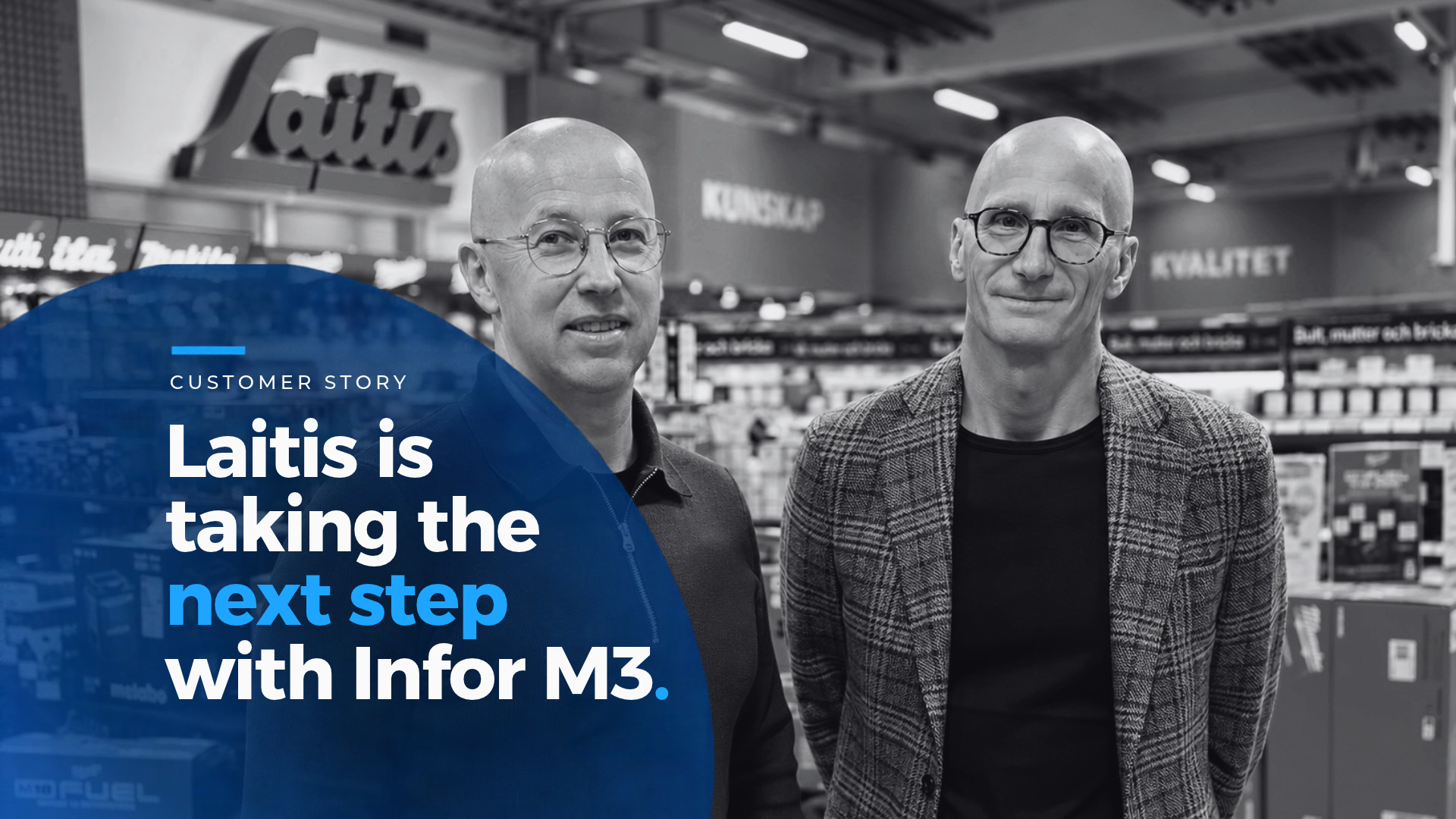
What do you do when your ERP system still works – but may not be the right system for where the business is going? For Laitis, that question became the starting point for a bigger change. Now, together with Navcite, the company is taking the next step into Infor Cloudsuite M3 – challenging familiar ways of working and building for what comes next.
A system that works – and a reason to change
Laitis’ existing ERP system has served the business well for many years. It is stable, familiar and deeply embedded in everyday operations. However, with the system approaching the end of its lifecycle, Laitis needed to look ahead and invest in a solution that could support the business for years to come.
Our old system has been very reliable. But we needed to look just a few years and ask whether we had a system that could meet future requirements, Mattias Hedlund, CEO, Laitis.
Laitis decided to move into owner KGK’s existing environment. That creates a common ERP direction, but it also opens up a wider question: if the platform is changing, which established ways of working should follow – and which should be reconsidered?
A chance to challenge the familiar
Before the implementation began, Laitis had already invested time in reviewing its own processes. That work is now helping the organisation separate genuine business requirements from routines that may simply have become familiar over time.
We’ve done things in certain ways for a long time. This project has made us stop and ask do we actually need to work this way in the future, Mattias Hedlund, CEO, Laitis
That is an important distinction in any ERP transformation. The goal is not to reproduce yesterday’s processes in a new system. It is to understand what the business needs, what creates value, and where there is an opportunity to work differently.

Close enough to understand. Experienced enough to challenge
For Laitis, the choice of implementation partner was not only about system knowledge. Being local mattered, but so did the personal relationship and having people in the project who understand the business behind the requirements.
That closeness becomes most valuable when it is combined with experience. A strong implementation partner should not simply confirm every requirement. It should understand why the requirement exists, challenge it when needed and help the customer see the consequences of different choices.
Our job is not to reproduce the customer’s old way of working in a new system. We need to understand the business well enough to challenge where it creates value – and recommend a way forward, Lars Nordlund, Partner, Navcite.
This is also where the similarities between Laitis and Navcite become relevant. Both place value on close customer relationships and on taking responsibility beyond an individual task. For Navcite, that means staying close to the operational reality while keeping sight of the bigger implementation.
From business understanding to implementation
Navcite’s starting point is the business, not the system. The wider way of working follows the customer from strategic direction through implementation and into continuous improvement. For Laitis, the project is now in the implementation part of that journey.
At this stage, the challenge is to turn business knowledge and requirements into clear decisions and a workable direction. As complexity grows, structure matters – but only when it makes the project easier to navigate rather than adding administration.
A good implementation should make complexity easier to manage. The customer should know what has been decided, what happens next and who is responsible for moving it forward, Lars Nordlund, Partner, Navcite.
Experience should give direction
The initial work to understand Laitis’ business, processes and requirements has now been completed. Laitis brings deep knowledge of its everyday operations. Navcite brings M3 expertise, implementation experience and an outside perspective.
There will rarely be only one technically possible answer in an ERP implementation. The value of experience is not in presenting every possible option. It is in helping the customer understand which path makes sense for the business – and why.
We have a long list of how we would like things to work. What we need now is someone with the experience to say: this is the way we recommend – and this is what we would do differently, Mattias Hedlund, CEO, Laitis.
That does not mean Navcite makes Laitis’ business decisions. It means bringing enough understanding and experience to make those decisions clearer, challenge assumptions where needed and turn decisions into progress.
This is where the story begins
Most ERP customer stories are told afterwards. The system is live, the difficult decisions have already been made, and the results can be measured with the benefit of hindsight.
This story is different. We are following Laitis while the implementation is happening – because the strength of an implementation partner is not only visible at go-live. It is visible in how the project starts, how the business is understood, how difficult choices are handled and whether the people involved know what needs to happen next.
For Laitis, the foundation is now being built. Established ways of working are being questioned, the future direction is becoming clearer, and the implementation is moving towards the decisions that will shape the new solution.
In the next chapter, we will return to Laitis to see what happens when requirements become recommendations – and recommendations start becoming a solution.